

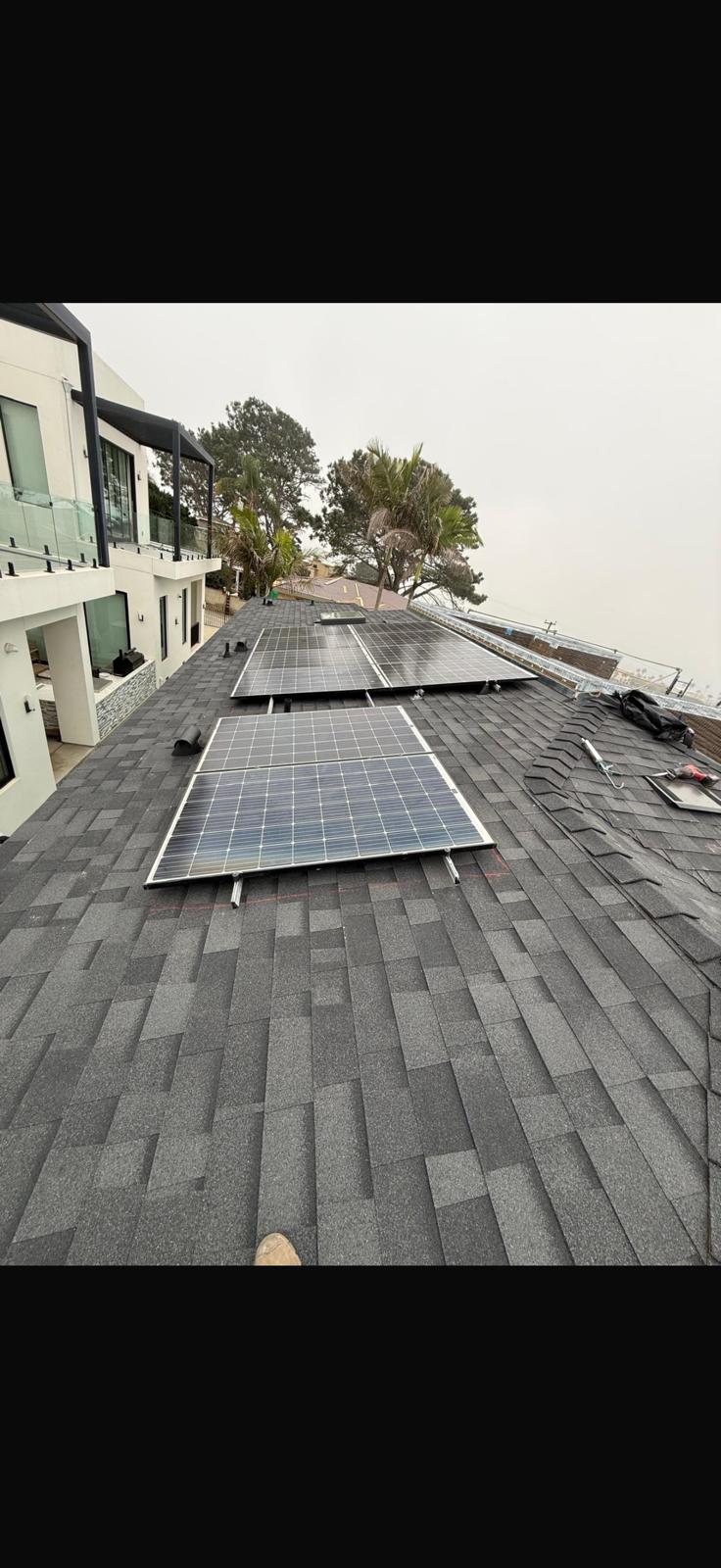
Here’s the honest answer: most San Diego homes land somewhere in the ballpark of $15,000 to $30,000 for a solar panel system before incentives, and roughly $11,000 to $21,000 after the 30% federal tax credit. That’s a wide range on purpose, because the real number depends on how much power your home uses, the size of the system, your roof, and whether you add a battery. A smaller home with a modest electric bill can come in well under that; a larger house running AC, a pool pump, and an EV can run higher. The only way to know your number is a custom look at your roof and your last 12 months of SDG&E bills — and that part is free.
What almost everyone gets wrong is fixating on the sticker price alone. In San Diego, the number that actually matters is how fast the system pays for itself, and thanks to some of the highest electricity rates in the country, that payback tends to happen faster here than in most of the U.S. Let’s break down what you’re really paying for.
What actually drives the cost of solar panels in California
When people ask about the cost of solar panels in California, they’re usually picturing one fixed price. In reality, a quote is built from a handful of moving parts. Here are the big ones.
- System size (kW). This is the single biggest factor. Systems are priced roughly by the kilowatt, and your size is set by how much electricity you burn. A typical San Diego home needs something in the range of a 5 kW to 9 kW system, but a high-usage household can need more. Bigger system, bigger number — but also bigger savings.
- Roof type and complexity. A simple, newer composition-shingle roof is quick to work on. Spanish tile, slate, a steep pitch, multiple facets, or lots of shading from trees all add labor and hardware. Two identical-sized systems can price differently purely because of the roof under them.
- Panels and inverter. Premium high-efficiency panels cost more up front but produce more power in a smaller footprint — which matters if your roof space is tight. Your inverter choice (string vs. microinverters) affects both price and how the system handles partial shade.
- Battery backup. Adding energy storage is the most common reason a quote jumps. A battery isn’t required, but under California’s NEM 3.0 net-billing rules it often makes strong financial sense because it lets you store cheap daytime solar and use it at night instead of buying expensive grid power. Expect a battery to add meaningfully to the total.
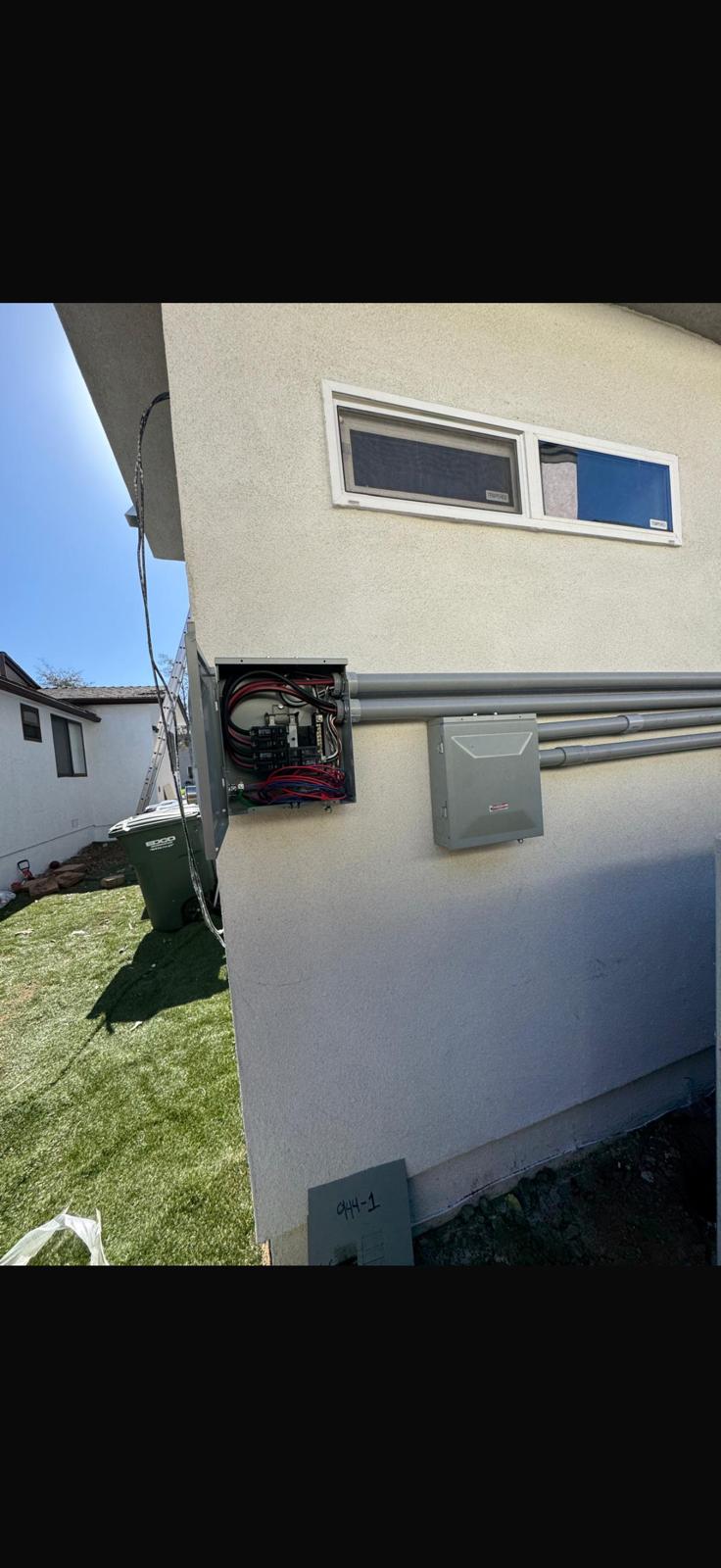
- Electrical work. Older homes sometimes need a main panel upgrade before solar can be added safely. Because we’re a licensed C-10 electrical contractor (CSLB #1075064) as well as a solar company, we can handle that in-house instead of subbing it out.
If you want to see how these pieces fit together on a real roof, our solar panel installation page walks through the process step by step.

The 30% federal tax credit brings the price down
The federal Residential Clean Energy Credit lets homeowners claim 30% of the cost of a qualifying solar system back as a credit on their federal taxes. On a $22,000 system, that’s around $6,600 knocked off what you effectively pay — and if you add a battery, the storage generally qualifies too. This is a tax credit, not a rebate check, so it reduces what you owe the IRS. A tax professional can confirm how it applies to your situation, but for most homeowners it’s the difference-maker that turns a good investment into a great one.
Why San Diego’s high electricity rates make solar pay off faster
This is the part that makes San Diego different. SDG&E has some of the highest electricity rates in the entire country, and those rates have climbed steadily for years. When you’re paying a premium for every kilowatt-hour from the grid, every kilowatt-hour your panels produce is worth more. That’s the core reason so many local homeowners ask whether solar is worth it in San Diego — and why, for a lot of them, the answer is a clear yes.
The way it works: your panels offset the power you’d otherwise buy at those steep rates. The higher the rate you’re escaping, the faster your savings add up. It’s common for a well-sized residential system in our area to reach a return on investment in roughly five years or so, with a 25-year warranty behind the equipment long after it’s paid for itself. Treat that timeline as a general pattern rather than a promise — your exact payback depends on your usage and rate plan — but the direction is consistent: high rates shorten the wait.
Financing: you don’t need to pay it all up front
The full system price is what tends to scare people off, but very few of our customers write one big check. We work with local lenders including Mypoint Credit Union and Wellhouse Credit Union, and there are no-out-of-pocket solar options that let you get panels on the roof without a large down payment. For a lot of San Diego homeowners, the monthly financing payment ends up close to — or below — what they were already sending SDG&E every month. You’re essentially swapping a rising utility bill for a fixed payment on an asset you own.
If a battery is part of your plan, our battery backup systems can be rolled into the same financing package. And because we handle solar, storage, panel upgrades, and EV chargers as one team, you’re not juggling separate contractors and separate loans. You can see the full picture on our financing page, or explore the whole lineup under solar services.
How to get a real number for your home
Ranges are useful for planning, but they can’t tell you what your roof will actually cost or save. Two homes on the same street can need very different systems. The real number comes from three things: your recent SDG&E usage, a look at your roof and electrical panel, and your goals — are you trying to zero out your bill, add backup power, or prep for an EV? A free estimate pulls all of that together into one clear figure with the tax credit and financing already factored in. Whether you’re in Carlsbad, Rancho Santa Fe, Jamul, or anywhere across San Diego County, that consultation costs you nothing and comes with no pressure.
Frequently asked questions
How much do solar panels cost in San Diego on average?
As a general industry range, most San Diego homes fall somewhere around $15,000 to $30,000 before incentives, or roughly $11,000 to $21,000 after the 30% federal tax credit. Your actual price depends on system size, roof type, panel choice, and whether you add a battery. A free estimate based on your SDG&E bills gives you an exact figure.
Is solar worth it in San Diego?
For many homeowners, yes — largely because SDG&E rates are among the highest in the country. The more you’re paying the grid, the more each solar kilowatt-hour saves you, which is why local payback periods tend to be shorter than the national average. The best way to confirm it for your home is a custom estimate.
Does the 30% federal tax credit still apply?
The federal Residential Clean Energy Credit currently lets homeowners claim 30% of a qualifying solar (and battery) system as a credit on their federal taxes. It reduces what you owe rather than arriving as a rebate check, so a tax professional can confirm exactly how it applies to you.
Can I get solar with no money down?
Often, yes. We work with lenders including Mypoint Credit Union and Wellhouse Credit Union and offer no-out-of-pocket solar options. Many homeowners find their monthly payment lands near or below their old SDG&E bill, so they’re swapping a rising utility cost for a fixed payment on a system they own.
Do I need a battery, and how much does it add?
A battery isn’t required, but under California’s NEM 3.0 net-billing rules it frequently improves the economics by letting you use stored daytime solar during expensive evening hours. It does add meaningfully to the total. Whether it pencils out for you depends on your usage pattern, which we’ll walk through during your estimate.
How long does it take for solar to pay for itself here?
It varies by home, but a well-sized residential system in San Diego commonly reaches return on investment in roughly five years or so, with equipment backed by a 25-year warranty. High local electricity rates are the main reason that timeline tends to be faster here than in most other markets. Treat it as a general pattern, not a guarantee.
Want your exact solar number?
Get a free, no-pressure estimate built around your SDG&E bills, your roof, and the 30% tax credit — from a licensed C-10 solar and electrical team serving San Diego County (CSLB #1075064).