

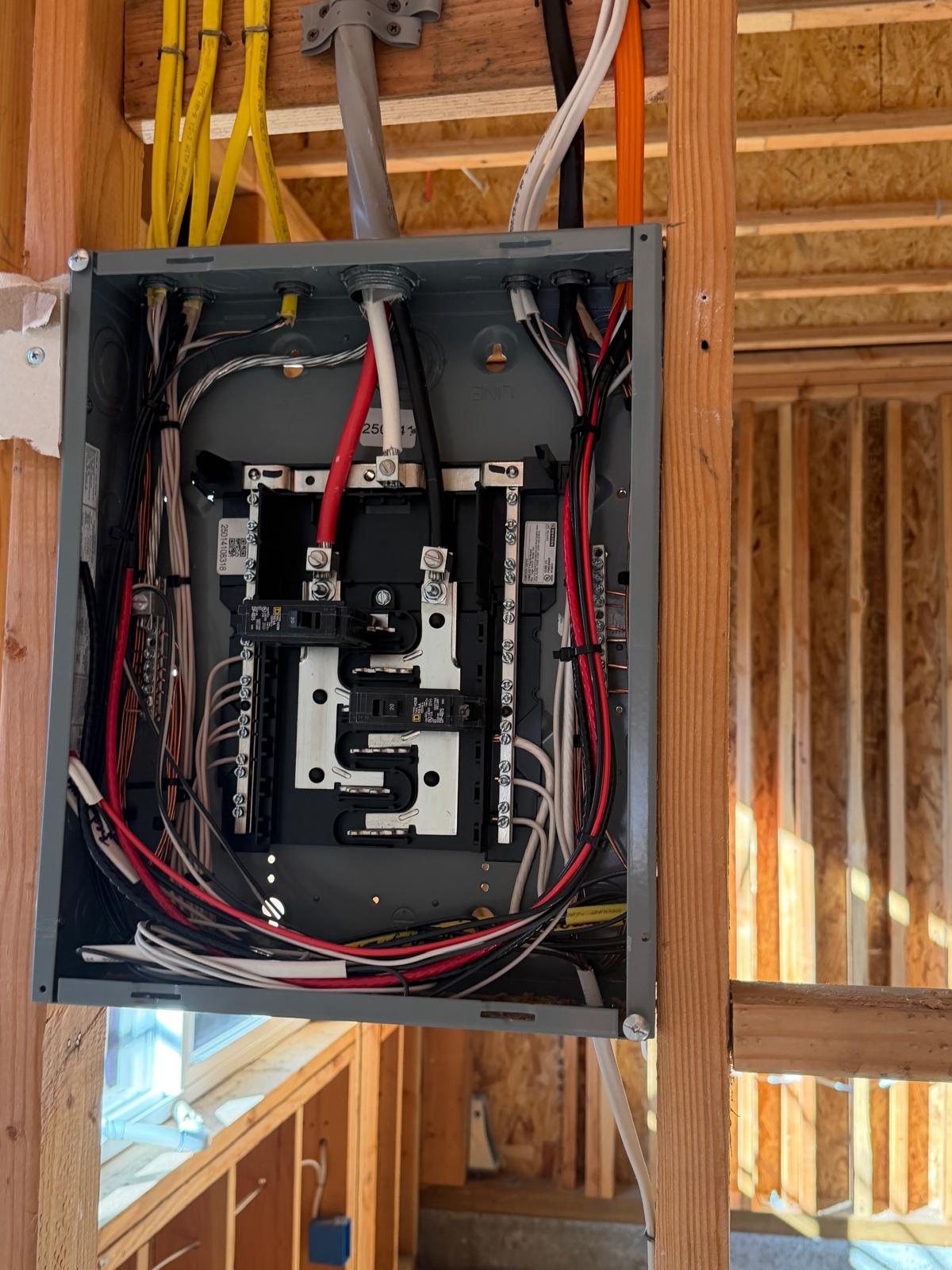
Short answer: sometimes yes, sometimes no. If you have an older 100-amp panel, or a panel that’s already packed full with no spare breaker spaces, you’ll probably need an upgrade before you add solar or an EV charger. But plenty of homes already running a 200-amp panel have room to add one of those loads without touching the panel at all. The only way to know for sure is a load calculation on your specific home — not a guess based on the house next door.
That’s the honest version most homeowners never get. A lot of the confusion out there makes it sound like every new solar system or car charger automatically means tearing out your panel. It doesn’t. What actually matters is three things: how much amperage your panel is rated for, how many open breaker spaces you have, and what your home already pulls on a normal day. Let’s walk through each one so you can size up your own situation before anyone quotes you a dime.
How to tell what your panel can actually handle
Go stand in front of your main electrical panel — usually a gray metal box in the garage, on an exterior wall, or in a hallway closet. Three things tell you almost everything you need to know.
1. The panel’s amperage rating. Look at the big main breaker at the top or bottom of the panel. It’ll have a number stamped on the switch: 100, 125, 150, or 200. That’s your service size. Most homes built or updated in the last couple of decades have a 200-amp panel. Older San Diego homes — especially in established neighborhoods — often still run a 100-amp service, and that’s where upgrades come up most often.
2. Available breaker spaces. Even a 200-amp panel can be “full” if every slot already has a breaker in it. Solar, a battery, and a hardwired EV charger each need their own dedicated breaker space (sometimes a double). If there’s no room, you’re either adding a sub-panel or upgrading the main.
3. Your actual electrical load. This is the part homeowners can’t eyeball. A licensed electrician runs a load calculation — adding up your HVAC, water heater, range, dryer, existing circuits, and the new loads you want — to see whether your service has headroom or is already maxed out. Two homes with the same 200-amp panel can land on opposite answers depending on what’s plugged into them.

Signs you probably need a panel upgrade
You don’t need an engineering degree to spot the warning signs. If a few of these sound familiar, put a panel upgrade on your radar before you commit to solar or a charger:
- Your main breaker reads 100 amps or less, and you want to add solar, a battery, or a fast EV charger.
- The panel is physically full — no open slots, or someone’s already doubled up breakers to make things fit.
- You’ve got a fuse box, a Federal Pacific or Zinsco panel, or anything that looks like it hasn’t been touched since the ’70s or ’80s.
- Breakers trip often, the panel feels warm, or you smell anything burning near it (that last one is a call-us-today situation).
- You’re planning to stack loads — solar plus battery backup plus a Tesla or other EV charger all in the same year.
If none of that applies and you’re already on a modern 200-amp panel with open spaces, there’s a good chance you can add a single load — say, just an EV charger — without an upgrade. A quick load calc confirms it.
Why solar + battery + EV charging often pushes San Diego homes to 200 amps
Here’s where a lot of local homeowners land. One upgrade at a time, a modern home might squeak by. But San Diego living has a way of stacking projects. You put solar on the roof, then you realize that with SDG&E rates — among the highest in the country — and California’s NEM 3.0 net billing rules that took effect in 2023, a battery makes your solar far more valuable by storing power instead of exporting it cheap. Then a new EV shows up in the driveway and you want a Level 2 charger that actually fills the car overnight.
Add those three together and the math changes fast. A modern EV charger alone can draw as much as a whole older home’s worth of capacity. Bolt a battery system and its backup wiring onto that, and a 100-amp service simply runs out of room — both in amperage and in physical breaker slots. That’s why the jump from 100 amp to 200 amp service comes up so often here. A 200 amp panel upgrade gives you the headroom to run solar, store it, and charge a car without living on the edge of your service limit.
The upside: doing it once, up front, is cleaner and usually cheaper than upgrading in pieces. When we plan a project, we look at where you’re headed — not just today’s load — so the panel you put in supports the battery and charger you’ll want next, not just the solar you’re buying now.
The permits and the SDG&E side of things
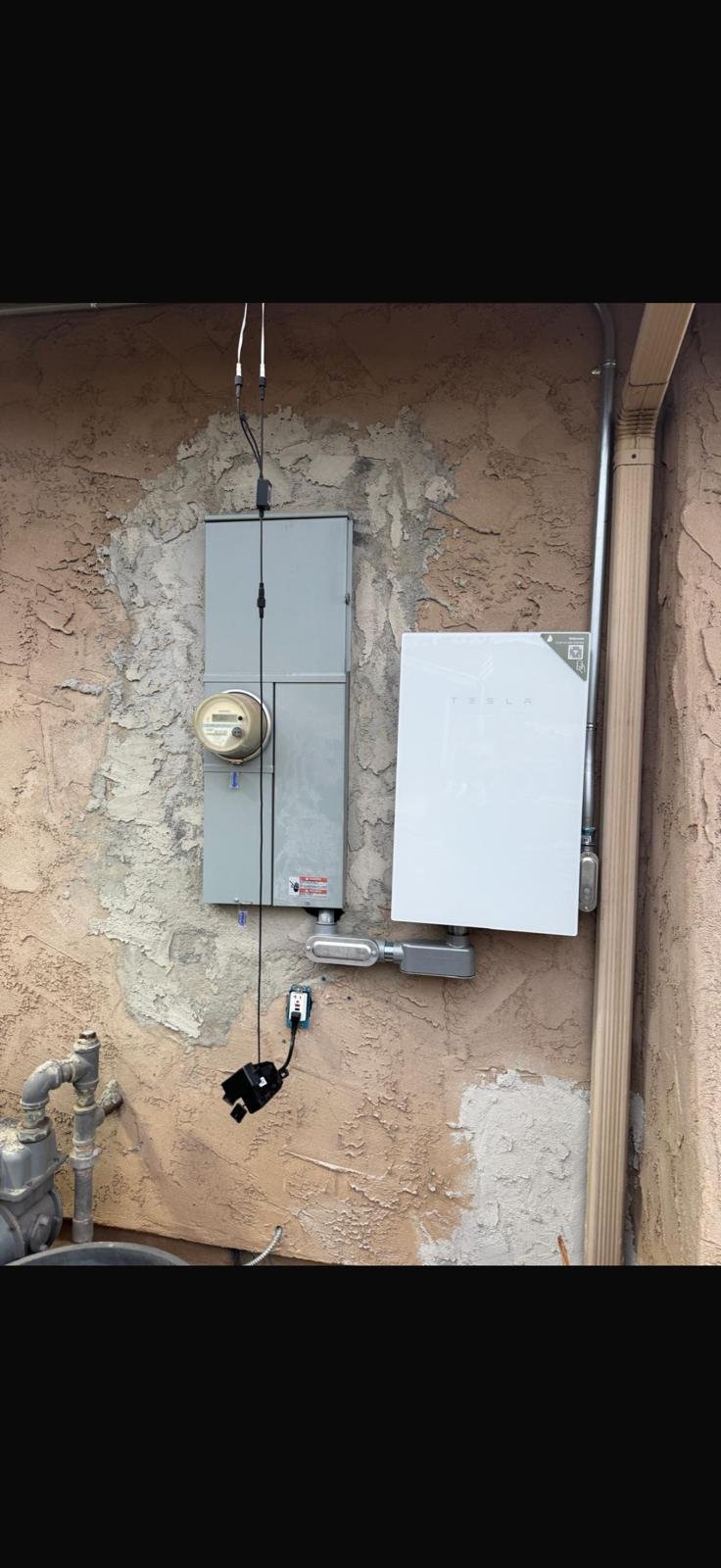
A panel upgrade isn’t a plug-and-play job, and that’s a good thing. Any main service change needs a permit pulled with your local building department, and because you’re touching the service that connects to the grid, the utility — SDG&E here — has to sign off too. That usually means coordinating a disconnect and reconnect at the meter, an inspection, and sometimes a short window without power while the work happens.
None of that should scare you off — it just means the job has to be done by a licensed contractor who handles the paperwork and inspections, not a handyman working off the books. As a licensed C-10 electrical contractor (CSLB #1075064), that permitting and utility coordination is part of what we do on every service upgrade. You shouldn’t have to chase SDG&E or the city yourself.
What does a panel upgrade cost?
This is the question everyone wants pinned down, and it’s the one that deserves the most honesty. Electrical panel upgrade cost varies a lot — a straightforward like-for-like swap on an easy-to-reach panel sits at one end, while a job that also needs a new meter, a service mast, trenching, or utility upgrades runs higher. As a general industry range, most California homeowners see panel upgrades land somewhere in the low-to-mid four figures, but your roof, your service run, and how much rework the utility requires all move that number.
Anyone who quotes you an exact price without looking at your panel is guessing. That’s why we give free, custom estimates — and if the upgrade is part of a solar project, it’s worth remembering the 30% federal Residential Clean Energy Credit can apply to eligible solar and battery costs, and we offer financing through Mypoint Credit Union and Wellhouse Credit Union, including no-out-of-pocket solar options. We’ll show you the real number for your home and how it fits the whole project.
One team for the panel, the solar, and the charger
Here’s the part that saves San Diego homeowners the most headache. Because Sky Source Electric is both a solar company and a C-10 electrical contractor, we handle the panel upgrade, the solar battery backup, and the EV charger installation as one coordinated job — not three separate contractors pointing fingers at each other. If you’re going with a Tesla charger or any other Level 2 unit, we size the panel around it from day one.
That means one load calculation, one permit process, one crew, and one point of contact from Rancho Santa Fe to Carlsbad to Jamul and across San Diego County. When the panel, the battery, and the charger are planned together, everything fits the way it should — and you’re not paying to redo work because the last person didn’t leave room for the next.
Frequently asked questions
Do I need to upgrade my panel for solar?
Not always. Solar itself adds a breaker, and many 200-amp panels have room for it. Older 100-amp panels or full panels usually do need an upgrade first. A load calculation on your home gives you the real answer — it’s not the same for every house.
Will a 100-amp panel handle an EV charger?
Sometimes, for a lower-amperage charger, if the rest of your load is light. But a full-speed Level 2 charger often pushes an older 100-amp service past its limit, which is why the 100 amp to 200 amp upgrade comes up so often. We run the numbers before recommending anything.
How much does a 200 amp panel upgrade cost?
It depends on your existing service, whether a new meter or mast is needed, and what the utility requires. As a general range, most California panel upgrades land in the low-to-mid four figures — but the only accurate number is a free custom estimate for your specific home.
Do I need a permit to upgrade my electrical panel?
Yes. A main service upgrade requires a building permit and coordination with SDG&E for the meter disconnect, reconnect, and inspection. A licensed C-10 contractor handles all of that for you — it shouldn’t be a DIY or handyman job.
Can you do the panel, solar, battery, and EV charger together?
Yes — that’s exactly how we prefer to work. As both a solar company and an electrical contractor, we plan the panel around everything you want now and soon, so one crew handles the whole project instead of three separate trades.
Do you serve my area for panel upgrades and EV charger installation in San Diego?
We serve all of San Diego County — Rancho Santa Fe, Carlsbad, Jamul, Spring Valley, Encinitas, Del Mar, Escondido, Vista, San Marcos, Poway, Solana Beach, La Jolla, and Oceanside — and we’re open 24/7 if you’ve got an urgent electrical issue.
Not sure what your panel can handle? Let’s find out.
Get a free load calculation and a straight answer on whether you need an upgrade for solar, battery, or an EV charger — no pressure, no guesswork.